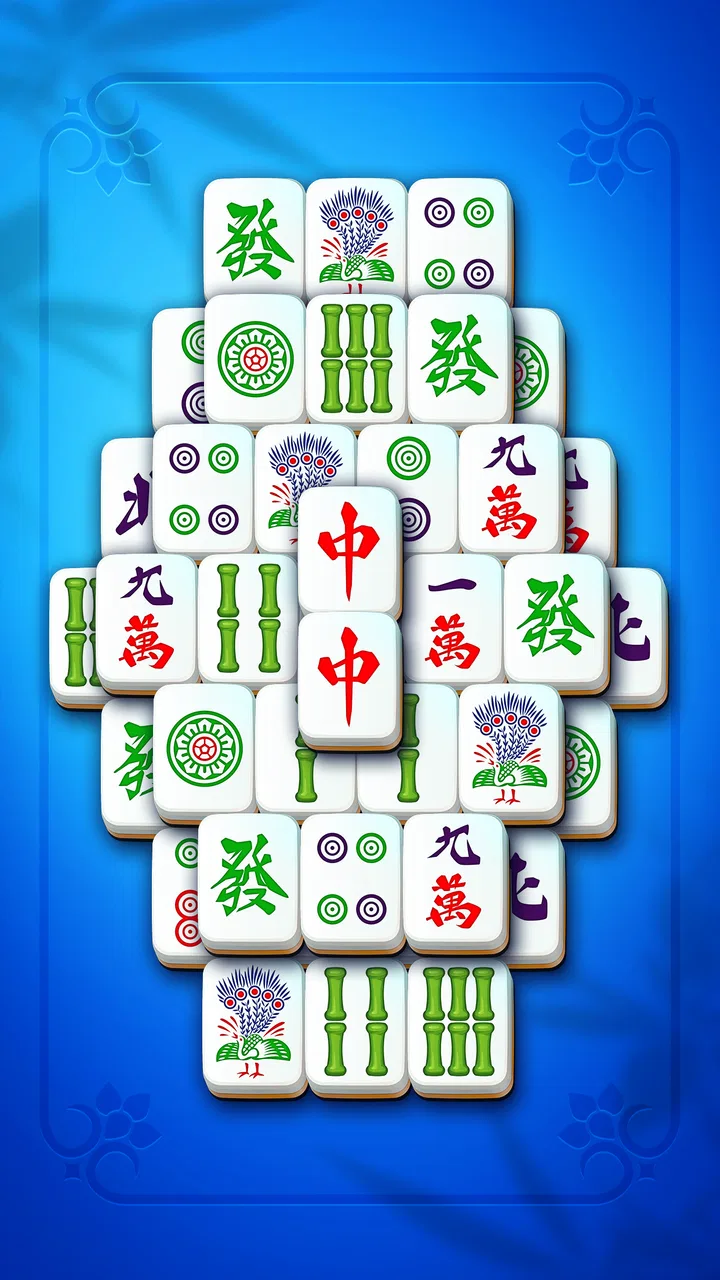
Mahjong Club - Solitaire Game
- 4.8
- Rating
- 10.00M
- Installs
- Free
- Price

 Analysis by App-foxy
I approached Mahjong Club - Solitaire Game as the kind of board game you open when you want a quiet break rather than a demanding competition. It is a tile-matching puzzle from GamoVation, built around the familiar Mahjong solitaire format: find matching exposed tiles, clear the layout, and keep planning until the board is empty. The basic idea is easy to understand, but the quality of the experience depends on details such as how quickly a board begins, how comfortable the tiles are to read, and how well the game fits short sessions.
My overall impression is positive. The game feels aimed at people who enjoy calm concentration, repeated short puzzles, and a traditional board-game atmosphere without needing another player. It is free to start, suitable for Everyone, and available on devices using Android 6.0 or later. Its store summary presents it as a relaxing Mahjong experience with offline puzzle play, which matches the central appeal: this is designed to be picked up whenever you have a few spare minutes, not studied like a complex strategy title.
How Mahjong Club feels in everyday use
I find that Mahjong Club works best when I treat each board as a small, self-contained pause rather than a challenge to rush through. In this section, I’ll look at how the first move sets that tone and why a quick scan before tapping can make a casual round feel more thoughtful. That leads naturally to the game’s feedback rhythm: each choice changes what the board offers next.
You May Also Like

 AccuWeather: Weather Radar
AccuWeather Review: A Quick, Clear Forecast for Everyday Decisions
For everyday plans, the best forecast is the one you can understand quickly. AccuWeather makes rain timing, radar, and local conditions easy to act on, with a few trade-offs.

 Hill Climb Racing
Why Hill Climb Racing Still Turns Crashes Into One More Run
A tiny car, a bumpy hill and one more upgrade: Hill Climb Racing keeps resurfacing because its simple chaos makes every near-miss feel personal.

 AliExpress - Shopping App
AliExpress Makes Global Shopping Feel Personal, but Shoppers Bear the Risk
AliExpress turns a global marketplace into a pocket-sized discovery engine. Its reach is useful, its shopping loop compelling, and its trade-offs easy to miss.

 Lords Mobile: Kingdom Wars
Lords Mobile Is a Kingdom-Building Routine, Not a Quick Match
A case-by-case verdict on the building, battles, device demands, and social commitments that make Lords Mobile rewarding for some players and exhausting for others.

 PDF Scanner app - TapScanner
TapScanner Makes Paperwork Easier to Capture, Check, and Share
TapScanner makes scanning with a phone feel less like a rescue operation and more like a dependable step in getting work done. Its capture tools are useful, though not flawless.

 Block Blast!
 Shows How Much a Puzzle Game Can Leave Out
A quiet grid game shows why puzzle players increasingly value instant clarity, repeatable skill and low-pressure play—and where the genre still needs to catch up.
More From Our News Desk
View All News


Quick starts and a deliberately unhurried pace
The strongest part of the design is its low-pressure rhythm. A Mahjong solitaire board does not ask me to react instantly, and that makes the game feel approachable after a long day. I can scan the layout, compare symbols, and decide whether removing a pair will reveal something useful. The pace comes from my decisions rather than from a timer-driven action system, so the game is naturally less stressful than many casual puzzle alternatives.
That relaxed structure also affects how fast the game feels. A short session can begin with almost no learning curve because the matching rule is familiar. I do not need to understand a long tutorial before making progress. The board itself explains the objective: exposed tiles are available, covered tiles are not, and each removal changes what I can see next.
There is a useful distinction between launch speed and decision speed. Even when I only have a small window for play, the format works because a single move can be made quickly, while a longer session gives me room to think through the whole layout. This makes it a better fit for waiting rooms, quiet commutes, or a few minutes before bed than games that punish interruptions.
The slower tempo will not suit everybody. If I want constant novelty, rapid scoring, or a strong sense of competition, Mahjong Club can feel restrained. It does not turn tile matching into an action game, and that is intentional. Its appeal is closer to sorting a visual puzzle than chasing an adrenaline rush.
What happens when I play for longer stretches
During heavier use, the main demand is not complicated controls but sustained visual attention. Repeatedly searching for identical tiles can become tiring, especially when several symbols look similar at a glance. I found that the best way to keep the experience comfortable is to play in focused blocks rather than treating it as an endless background activity.
A practical routine is to pause after finishing a board instead of immediately starting another one. That small break helps prevent the board from becoming a blur of patterns. It also makes the game feel more like a collection of individual puzzles rather than a task that has to be completed continuously. For users who enjoy relaxing games, this is a better approach than trying to maximize the number of layouts cleared in one sitting.
Another useful habit is to examine the board before making the first obvious match. Removing a pair simply because it is available is not always the most helpful choice in a layered layout. I prefer to look for pairs that expose important tiles or reduce a crowded section. This adds a modest planning element without making the game feel like a technical strategy exercise.
The difference between casual and heavy use is therefore mostly mental rather than hardware-related. A quick visit is easy to fit into a routine, while a long session can become repetitive if I am not interested in the matching pattern itself. Players who enjoy gradually improving their scanning ability will get more from extended play than those who need every round to introduce a major new mechanic.
Offline play and realistic reliability expectations
Offline puzzle play is one of the most practical aspects of the package. It means the core activity is well suited to situations where connectivity is inconvenient, such as traveling, waiting in a place with weak reception, or limiting mobile data. I particularly like this use case because Mahjong solitaire does not require live opponents to remain enjoyable; the board is enough to provide the challenge.
Offline access also changes how I judge reliability. A game that can support its main puzzle activity without depending on an active connection is less vulnerable to network interruptions during a session. If I am playing to relax, avoiding a sudden interruption is more valuable than having a large collection of online functions.
Still, I would separate the offline puzzle from anything that might depend on broader app services. I would not assume that every surrounding element behaves identically without a connection. The safe expectation is that the central solitaire activity is the reason to install it, while any optional or connected elements should be treated as secondary.
In normal use, the simple board format gives the app a dependable feel because there are not many complicated controls to manage. A tap-based matching game is easier to recover from than a fast game where a brief interruption can ruin a whole attempt. If I put the phone down and return later, the experience is naturally more forgiving than an action title, although I still prefer to finish a board before switching between several demanding apps.
Older phones, operating-system support, and resource awareness
The minimum requirement of Android 6.0 makes the game accessible to a wide range of Android users, including people who do not own a recent phone. That is important for this particular genre. Mahjong solitaire does not need to present itself as a technically intense experience; its value comes from clear tiles, responsive selection, and a comfortable layout.
On a device that meets the requirement, I would expect the game to be a reasonable choice for ordinary casual play, but I would still keep expectations realistic. An older phone may have less spare memory available when several apps are open, and switching repeatedly between them can affect any game. Closing unused apps before a long session is a sensible general step, especially if the phone already feels sluggish elsewhere.
Resource demands are also influenced by how the device is used. A brief puzzle session is a lighter workload than leaving the game open while multitasking, playing with high screen brightness, and running other demanding apps in the background. I would not choose Mahjong Club as a reason to upgrade a phone, but I would also not install it expecting the device to behave like a dedicated game console.
For smaller screens, tile readability deserves attention. Mahjong layouts can become visually dense, and a compact display may require more careful tapping. Users with eyesight concerns may prefer a larger phone or tablet because the extra space makes scanning pairs less tiring. That is not a flaw unique to this title; it is a natural trade-off of bringing a layered board onto a handheld screen.
Where the design feels stable, and where friction can appear
The game’s straightforward concept works in its favor. There is no need to learn an elaborate control scheme, and the central interaction is easy to repeat. That simplicity supports a stable-feeling routine: open the game, choose a board, match tiles, and stop when the puzzle is complete or the break is over.
The main friction comes from repetition and visual fatigue rather than from the rules. If I play many boards back to back, the familiar layout can start to feel similar even when the individual puzzles require different choices. This is the point where I would switch to another activity instead of forcing myself to continue. A relaxing game stops being relaxing when it becomes another item on a checklist.
There is also a monetization consideration. The game is free, but in-app purchases range from $0.99 to $94.99 per item. That wide range means I would pay attention to any purchase prompt and decide in advance whether optional spending is worthwhile for me. Someone looking for a completely purchase-free experience should be especially careful around the store and upgrade areas rather than assuming that free installation means every part is free.
For a family device, the Everyone content rating makes the game broadly approachable. Even so, I would still use the same basic purchase awareness I apply to any free mobile game, particularly if a child can access the device. The age rating describes the content, while purchase decisions are a separate matter.
Who will enjoy it most
I would recommend this game to people who already like solitaire-style puzzles, traditional Mahjong tile imagery, or quiet games that reward observation. It is also a good match for anyone who wants an offline-friendly activity that can be paused mentally without losing the point of the session. The lack of pressure makes it suitable for winding down, and the familiar matching structure means beginners can understand the goal quickly.
It can be useful for a very specific everyday scenario: I might open it during a short lunch break, complete part of a board, and return later when I have more time. Unlike a multiplayer game, it does not require another person to be available. Unlike a word game, it does not demand that I produce answers from memory. The task is visual, self-contained, and easy to resume as long as I am comfortable with the current board.
I would be more cautious about recommending it to players who need a strong narrative, competitive rankings, fast reactions, or constant mechanical variety. If the reason I play games is to chase increasingly complex systems, this may feel too gentle. Likewise, people who dislike repeated pattern recognition may find the core loop monotonous after the initial novelty wears off.
How it compares with other casual board choices
Compared with digital card solitaire, Mahjong Club offers a more spatial kind of thinking. Card solitaire often focuses on ordered piles and managing available moves within a familiar sequence. Mahjong solitaire asks me to read layers and anticipate which removal will uncover useful options. That makes it feel more visual and three-dimensional, even though the controls remain simple.
Compared with match-three games, it is less frantic and less dependent on creating chain reactions. I am not scanning for a move before the board changes on its own. The advantage is control: I can take time to inspect the arrangement. The trade-off is that the experience may feel less lively to someone who enjoys cascading effects and constant animation.
Compared with traditional multiplayer Mahjong, this is a different activity entirely. I am not learning a competitive rule set or reading opponents; I am solving a solitary arrangement of tiles. That makes it easier to enter and more suitable for a private break, but it does not replace the social and strategic depth of playing against other people.
These comparisons help clarify the right reason to install it. I would choose it for calm visual problem-solving, not because it offers the broadest board-game variety or the most intense challenge in the category. Its strength is focus, and its weakness is that focus can become sameness for players who need frequent surprises.
Tips that make the puzzles more comfortable
My first tip is to avoid taking the most obvious pair automatically. Before tapping, I scan for tiles that are blocking several others and consider whether removing them will open the board. This turns each move into a small decision and reduces the chance of reaching a position with too few useful options.
My second tip is to use the phone’s physical setup to improve accuracy. I hold the device steadily, keep the screen clean, and avoid playing while walking. Mahjong tiles can be visually close together, so a deliberate tap is more comfortable than repeatedly correcting accidental selections.
My third tip is to treat offline play as a planning advantage rather than merely a backup. I can start a board before entering a low-signal area instead of waiting until connectivity becomes unreliable. That makes the game useful for travel and waiting, where the point is to have something dependable without needing to search for a connection.
Finally, I keep spending separate from the puzzle habit. Because the game is free to install but includes paid items, I decide whether I want to spend anything before I am deep into a session. That simple boundary keeps a relaxing pastime from turning into an impulsive purchase.
My performance verdict after weighing speed, stability, and limits
Mahjong Club succeeds because its performance expectations are modest and well matched to its purpose. It is a board game, not a graphics showcase, so the important questions are whether I can get into a puzzle comfortably, read the tiles, and continue without unnecessary pressure. The Android 6.0 minimum makes it approachable for users with older devices, while offline puzzle play strengthens its usefulness in everyday situations.
The title comes from GamoVation, and its popularity is reflected in an average rating of 4.9 from around 913 thousand ratings, alongside more than 10 million installs. Those figures suggest that the format has found a large audience, although popularity does not remove the personal question of whether repeated tile matching is enjoyable for me.
It was released on January 1, 2022, and the current version is 4.4.1. I would keep the app updated through the normal store process, especially when using an older phone, because current versions are generally the sensible starting point for checking compatibility and day-to-day behavior.
My final recommendation is straightforward: install it if you want a calm, accessible Mahjong solitaire game that fits short breaks and can support offline puzzle sessions. I would skip it if I need multiplayer interaction, a story, or a constantly changing challenge structure. For the right player, the best feature is the freedom to think at your own pace; for the wrong player, that same calm simplicity will be the reason it feels repetitive.
FAQs for Mahjong Club - Solitaire Game
01What is Mahjong Club - Solitaire Game?
Mahjong Club - Solitaire Game is a mobile app that brings the classic puzzle game of Mahjong to your smartphone or tablet. It offers a relaxing yet challenging experience, with beautifully designed tiles and various layouts. The game is suitable for both beginners and seasoned players, providing hours of entertainment.
02Is Mahjong Club - Solitaire Game free to play?
Yes, Mahjong Club - Solitaire Game is free to download and play. However, it does offer in-app purchases that allow you to buy additional features or remove ads. These purchases are optional, and you can enjoy the full game experience without spending any money.
03What features does Mahjong Club - Solitaire Game offer?
Mahjong Club - Solitaire Game includes a variety of features such as daily challenges, hundreds of unique layouts, and customizable themes. It also offers an intuitive interface, relaxing music, and the ability to save your progress. The game is designed to improve your concentration and problem-solving skills.
04Can I play Mahjong Club - Solitaire Game offline?
Yes, you can play Mahjong Club - Solitaire Game offline. Once downloaded, the game does not require an internet connection, making it perfect for playing on-the-go without using your mobile data. However, certain features like daily challenges may require an internet connection.
05Is Mahjong Club - Solitaire Game available on both Android and iOS?
Yes, Mahjong Club - Solitaire Game is available on both Android and iOS platforms. You can download it from the Google Play Store for Android devices and the Apple App Store for iOS devices. Ensure your device meets the app's compatibility requirements for the best experience.
Pros
- Smooth and intuitive interface.
- Variety of challenging levels.
- Offline play available.
- Regular updates with new puzzles.
- Supports multiple languages.
Cons
- Contains in-app ads.
- Some levels can be repetitive.
- Limited free hints available.
- Requires internet for updates.
- No multiplayer mode.

Mahjong Club - Solitaire Game
Gallery